Mary
SCOTTISH ROMANCE: My Sinful Surrender to a Highlander Werewolf (Scottish Werewolf Pregnancy Romance) (Historical Medieval Shape Shifter Paranormal Science Fiction Short Stories)Mary’s story is defined by a stark reversal: the woman treated by George as a household servant and “useless barren woman” eventually builds a simpler, freer life with Thomas. Her significance lies not only in leaving an abusive marriage, but in the change of scale that follows. Under George, every journey, meal, bath, and sexual encounter is organized around his demands; with Thomas, housekeeping, cooking, friendship, and pregnancy become parts of a life she can inhabit rather than duties imposed upon her.
Identity and Life Under George
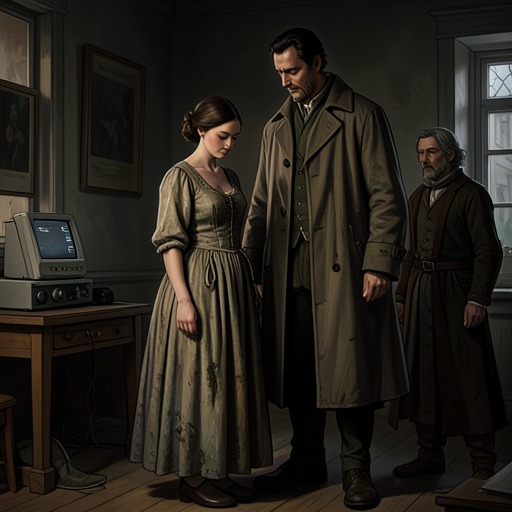
Mary is nearly thirty when her story begins, while her husband George is approaching fifty. For twelve years she has submitted to a marriage in which her labor and body are treated as his property. She travels to the nearby town in a carriage to obtain the particular tea and lemons George insists upon, despite the exhausting heat, humidity, dirt, and grit of the journey. Even her wish for a bath or a cool cloth must be postponed around the demands of the household.
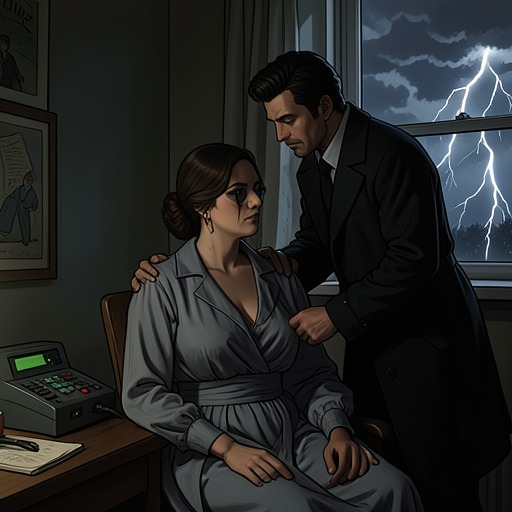
Her domestic service is inseparable from sexual coercion. George demands what he considers his “wifely duties,” and Mary submits because she has no practical power to refuse him. The encounters are neither pleasurable nor welcome; his repeated complaints that she has not produced an heir become a convenient justification for violating her body. Mary has tried everything she can to give him the son he wants, but by the time she is nearly thirty she has accepted that pregnancy may not happen. Her resignation is directed less toward childlessness itself than toward the hope that George might accept it without punishing her.
George’s behavior extends beyond the bedroom. He drinks increasingly often at the pub, and Mary attempts to be asleep or to pretend that she is asleep when he returns, knowing that the strategy sometimes deters him and sometimes fails. Her life is described as routine and bland because coercion has made repetition ordinary. The marriage’s apparent stability is therefore a structure of fear, labor, and enforced endurance rather than mutual security.
The Encounter With Thomas
Mary’s movement toward escape begins outside the controlled domestic space. While resting in the countryside with the cook, she first hears hoof beats as an ordinary part of rural life. When the sound grows close and the horse stops beside her, she looks up at the underside of a black horse’s jaw. She and the cook scramble away in terror, and Mary immediately recognizes that the rider is not one of George’s soldiers, since none of them would approach her in such a manner.
The rider identifies himself as Thomas, who works for Robert, and accuses Mary of trespassing. Their first exchange is marked by fear, indignation, and uncertainty rather than instant trust. Yet Thomas becomes the figure who exposes the insecurity of Mary’s position. After she leaves George, Thomas tells her that George does not want her back and has authorized others to do with her as they please because he will not give up his land for a “useless barren woman.” The information confirms that George regards Mary as both an unwanted body and an obstacle to property arrangements.
Mary’s response makes the practical stakes unmistakable: she has nowhere else to go. Her attachment to Thomas is therefore born within constrained circumstances, but the narrative does not leave her trapped in the same emotional and domestic pattern. Thomas offers a place where she can remain, and the pair fall asleep together after acknowledging their new intimacy.
A Different Domestic Life
Mary adjusts easily to Thomas’s household because its labor is simpler and no longer organized around George’s constant demands. Cooking, once merely another obligation within an oppressive marriage, becomes something she actually enjoys. The transformation is small in material terms but large in personal meaning: the same domestic sphere that previously reduced her to service now permits competence, routine, and pleasure.
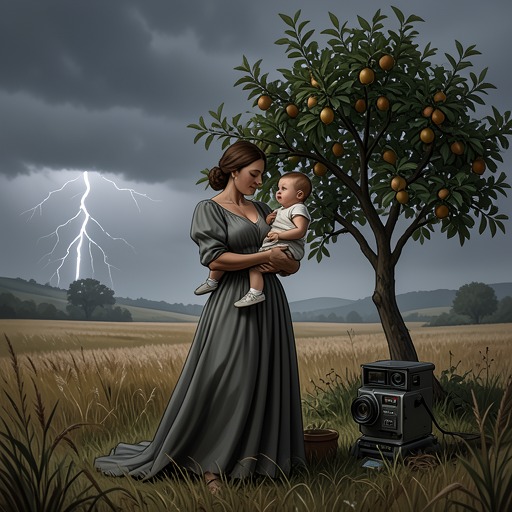
She also regains access to friendship and movement. Mary occasionally meets the cook in the apple grove for a snack, and Thomas does not object to her going. The cook notices how radiant Mary looks and remarks on how insufferable George has become in her absence. These meetings give Mary a social connection outside the household and provide an independent witness to the change in her appearance and condition.
The contrast between the two marriages is consequently expressed through permission. George determines what Mary buys, when she may rest, and whether she must submit sexually; Thomas allows her to visit her friend and does not make isolation the price of domestic belonging. The evidence does not erase the unequal circumstances surrounding Mary’s escape, but it does show that her new life contains more room for choice, companionship, and bodily ease.
Pregnancy, Freedom, and Narrative Meaning
Mary’s pregnancy follows her departure from George and her life with Thomas. The timing creates a sharp narrative contrast with George’s repeated accusation that she is barren. Her body, previously judged according to its failure to provide George with an heir, becomes evidence that the problem was never a simple, fixed definition of Mary’s worth. The pregnancy also changes the emotional register of the household: the new life is associated with Thomas and with a relationship in which Mary is not treated as a defective instrument of succession.
Mary’s arc is therefore an escape narrative shaped by domestic and reproductive politics. George reduces marriage to service, inheritance, and access to a wife’s body, while Mary’s experience with Thomas reassembles domestic life around simpler labor, friendship, mutual attachment, and pregnancy. The story’s decisive irony is that the woman George condemns as barren becomes pregnant after leaving him, while the man who claimed authority over her is left outside the life she builds.
Through Mary, the narrative also exposes how women’s apparent “choices” can be narrowed by property, marriage, and social dependence. She does not begin with the freedom to leave safely; she is abandoned only after George’s household has already treated her as disposable. Her eventual change is consequently not a triumphant public rebellion but a private reconstitution of everyday life. Cooking, visiting the apple grove, resting beside Thomas, and carrying a child become the concrete signs that Mary has moved from enforced endurance into a future that George no longer controls.